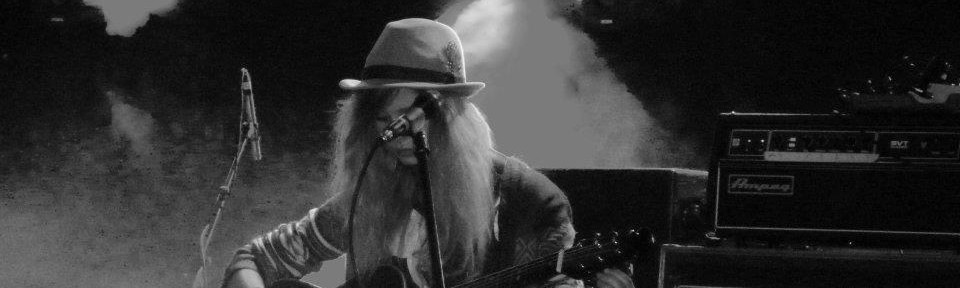
SLipknot guitar
 

Playing In The Style Of Slipknot (Part 2)

The Men Behind Slipknot …

As a guitar duo James and Mick work very well together and as with other metal acts with two guitar players, they do harmonize guitar parts. Moreover, it’s done tastefully and sparingly throughout their songs.

The rhythm work seems to be the bigger challenge when playing Slipknot especially for the novice player. Joey Jordison’s meticulous drumming and computer-like internal metronome, sets the bar high timing-wise for the rest of the instruments in the band. The soloing, while sometimes fast and furious, revolves around minor scales in often symmetrical patterns throughout the neck. Still, far from easy to replicate it seems to be a bit more conventional than their revolutionary riff work. For example, the somewhat simple (tonally speaking) intro riff from the Grammy award winning tune “Before I Forget”, requires impeccable timing and articulation to execute properly.

In his Guitar Part Magazine interview, James Root shares his approach to soloing as playing lead phrases in the spur of the moment in the studio, then going back and re-learning them from the recording. It’s certainly an approach that has worked well for him. Mick Thompson on the other hand has displayed very extensive knowledge on guitar effects and building an excellent metal guitar tone. Overall, they are two versatile and accomplished guitar players with an innovative style which certainly accounts for Slipknot’s cult following.

In conclusion playing in the style of Slipknot is probably not recommended for the absolute beginner. Yet, it can certainly add some polished brutality to your own sound and technique whether you’re an intermediate player looking to improve his learning curve or a seasoned pro skillful in other musical styles and looking to expand his knowledge. An excellent guitar method in the style of Slipknot is developed and published by Andy James from www.licklibrary.com.

Please check out lead guitarist, Svilen Mikov’s video playing in the style of Slipnot. Exclusive for Most Entertaining.

Share and Enjoy

  • Facebook
  • Twitter
  • Delicious
  • Digg
  • StumbleUpon
  • Add to favorites
  • Email
  • RSS
Slipknot
 

Playing In The Style Of Slipknot

Playing In The Style of Slipknot: Part 1

Looking beyond the shock image, explicit lyrics, and the nine man live show with clowns banging on barrels and running around on stage, we see two extremely well-versed rhythm and lead guitar players. Search beyond the mask to find James Root and Mick Thompson, two of today’s most prominent metal guitarists.

They are endorsed with signature models by the major guitar manufacturers, Fender, Ibanez, and Ovation, based not only on their visibility as players, but on their innovative and demanding playing style and distinct sound.

To play in the metal style of Slipknot you will need to set aside a separate guitar. Guitars with set bridges work better and Mick Thompson has pioneered the FX Edge Bridge manufactured by Ibanez to suit his personal preferences and playing style. It does keep the string clamping mechanism of the Edge tremolos, but it’s not a floating tremolo. No tremolo bar, no bomb diving. It’s not your traditional set bridge either. It’s a hybrid between two worlds with a separate bolt for regulating string tension. In combination with a locking nut on the guitar neck it results in simplicity and tuning stability. The FX Edge comes standard on all Mick Thompson signature Ibanez models. However, you do not absolutely need one to play in the style of Slipknot.

More important is how you tune up, or to be exact how you tune down. Slipknot plays in drop B tuning. You can think of it as a traditional drop D tuning (where the 6th string is tuned down a whole step) taken down further 3 half steps. It results in the instrument’ strings being tuned as follows: 1-C#, 2-G#, 3-E, 4-B, 5-F#, 6-B

Besides the very popular single position power chord (5th chord) the drop B tuning provides interesting opportunities for inverted minor, sus2, add13, and extended 4-string power chords not usually found in traditional heavy metal styles. Keep in mind that the low tuning will be a challenge both to your pickups and your effects rig. James and Mick use Seymour Duncan active pickups and Orange and Bugera amplification with a generous chain of effects including rack mounted and floor pedal effects to achieve the chunky sonic madness Slipknot is so well known for.

Please watch this space for part 2 and Mikov’s video!

Svilen Mikov, originates from Bulgaria and is a virtuosic electric lead guitarist who has spent a long time in the USA.  His playing experience has included opening for AC/DC during their Black Ice Tour.  He has recently become a guitar tutor with Most Entertaining.

Share and Enjoy

  • Facebook
  • Twitter
  • Delicious
  • Digg
  • StumbleUpon
  • Add to favorites
  • Email
  • RSS
trumpet tied in red ribbon
 

A Musical Resolution

Part 1    A New Year Resolution

It all started with a birthday present.  I’d been talking for years about learning to play a musical instrument, having been a singer since I was at school. What I really wanted to do was play a proper musical instrument in an orchestra.  With other people playing other proper musical instruments.  And then, on my 52nd birthday, I was given a trumpet tied up with a red ribbon.

That was two years ago and, since then, I’ve often admired my trumpet, occasionally polished it and even once or twice tried playing it.  Then, in January 2012, I made a New Year Resolution. I was going to find a trumpet teacher and learn to play the thing. I came across Finlay who seemed very positive about teaching me. Clearly, a man up for a challenge.

At my first lesson in February, the word ‘potential’ was used. I was thrilled. Of course, it was me that used the word and not Finlay but never mind. At my second lesson in March, I managed the first five notes of a C major scale.  Great excitement. Then Finlay suggested, at my third lesson, that I should play a piece in a group concert planned for the end of April.

Depression is setting in. I work full time as an educational adviser. I speak at national conferences in front of hundreds of people. But playing the right notes on a trumpet? In the right order? In public?

That New Year resolution is beginning to seem like a moment of madness…

Sheena Greco will be giving a wonderful trumpet debut with the support of her teacher and Most Entertaining Tuition Director Finlay Hetherington on Sunday 29th April at 3pm in Life Care, Cheyne Street, Stockbridge.


Share and Enjoy

  • Facebook
  • Twitter
  • Delicious
  • Digg
  • StumbleUpon
  • Add to favorites
  • Email
  • RSS
Name Nessie's New Guitar
 

How Nina Nesbitt finds inspiration to write her songs!

During my recent European tour I also had some spare time and used this to write some more songs. Myself and Passenger had a great writing session one day where we came up with a concept and then started jamming on our guitars and bouncing lyrics of each other. It resulted in a new song called “Strangers”. Passenger (Mike Rosenberg) is a fantastic songwriter who often has very witty lyrics in his songs and we found that we worked really well together bouncing ideas off each other. Songwriting is very personal, everyone goes about it in slightly different ways. For me every song I write has it’s own journey from beginning to end. Sometimes I have a lyric or concept that comes into my head first and other times it is maybe a beat or an instrumental that is created to start with.

Whatever way you’re inspired and like to write, be creative, go with the flow and experiment a lot with different sounds & rhythms. Listen to a lot of varied music and genres as it’s possible to learn from them in terms of composing your own material.  Play with words, write them down and record little samples in the process even just on your mobile phone so you won’t forget them and one day you will have your own song created. Some people work well in teams with others as well when songwriting, so this could be another option for you as sharing ideas with other musicians can be really fun.

I have also been in the recording studio since coming back from the European Tour and produced my recent EP with the amazing Jake Gosling, producer of Ed Sheeran’s platinum selling +Album. I had selected Jake as my producer as he understands my music very well and can interpret exactly how I want my music to sound like when produced in the studio. I would say to anyone looking to record their own material in a studio, find a producer you really feel you match up well with as it makes a massive difference to the end product. If you have a definite idea of how you want your music to sound like, its just a matter of finding a producer who can help you in the process. I have worked with a few different people in studios and they have all been very nice but not all have been able to interpret my music in the way I want it to sound like, so my advice is to ‘shop’ around before you decide who you may use for your recording experiences. My new EP was available for Pre Order on iTunes on 16th April and is being officially released on 23rd April – it’s called The Apple Tree! :)

I will be off on my own UK & Ireland Headline Tour soon as well as supporting Example on his UK Arena Tour. My new Martin guitar will be coming with me on this tour but the poor guitar does not have a name as yet and I like my guitars to have personal names :) I was thinking you could maybe all help me decide what to call my guitar……..There is still time to send in your entries to Most Entertaining which is where I first went to play guitar in a group with others, Prize for the most original name for my new guitar will win a guitar workshop course in Edinburgh. Competition is called ‘Name Nesse’s New Guitar’ Email info@mostentertaining.com with this heading. Good Luck!

Nina Nesbitt is a currently taking coaching on piano with Most Entertaining and is a former guitar workshop student.  The winner of Name Nessie’s New Guitar will be announced at Most Entertaining’s Spring Concert on Sunday 29th April and will have the opportunity to take part in the next guitar 6 week workshop course. 

Share and Enjoy

  • Facebook
  • Twitter
  • Delicious
  • Digg
  • StumbleUpon
  • Add to favorites
  • Email
  • RSS
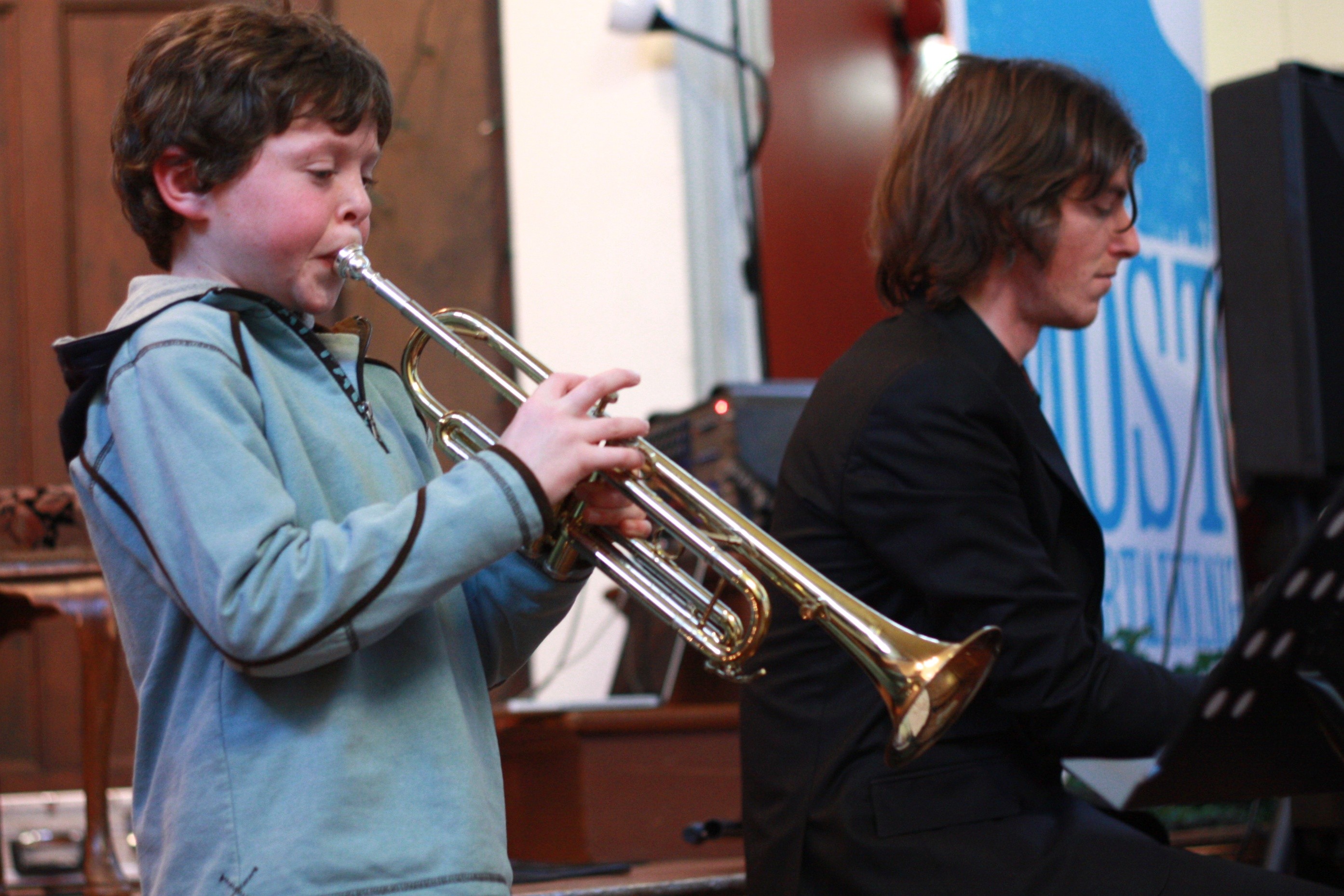
Patrick's debut on trumpet accompanied by Robert on piano; Winter 2011
 

Key to an enjoyable performance!

I strongly believe that music should be accessible to absolutely anyone. It should not matter whether you are young, old, a beginner or an established performer. All musical backgrounds must also be allowed to shine – there should be no elitism. In addition to this, music should always be fun. It is no coincidence that every music teacher I have come across shares a passion for terrible, but funny light hearted music related jokes. Any previous student who have been  taught by me will vouch for my poor musical humour. For example, when teaching the word ‘diminished’ to exam students I often associated this key musical word with a Mini  – a small car which used to arrive into the music school car park every Wednesday morning!

The main reason for my blog is that Most Entertaining’s Spring concert is now less than two weeks away and excitement is growing amongst a huge range of students and teachers. Since joining Most Entertaining last year as a piano and brass tutor, I have found that the company is much more than just a teaching agency and that public performance is a big part of the organisation. Having regular concerts allows musicians to meet each other, form new friendships as well as gain self confidence from playing in a relaxed setting. I am seeing first hand the benefits of having these concerts as a target for lessons, and pupils seem to love it. 

In terms of performance I would like to share a few thoughts about preparing to play live to an audience. I believe the most important point is to try and enjoy it and have fun. For me, I have found that I can overcome performance issues through performing to someone I know in the audience, such as a family member. They can offer a smile and lots of support. Also, remember that everyone makes mistakes, no performance is perfect. Always keep the flow of the piece. Finally, and for me the most important point is to make the performance your own. Communicate,  through dynamics, interpretation and style. If you feel the music should slightly slow down or speed up, do it. My final tip for more advanced performers is to try and understand the harmony behind your piece.  It is with this understanding that it is then possible to react to the composer’s intentions much more, making way for further sensitivity within the performance.
Robert Briggs is the former assistant director of music of the Bethany School in Kent and now is a full-time piano and brass tutor for Most Entertaining. He will be accompanying students at our next concert on Sunday 29th April 3-5pm, Life Care, Cheyne Street, Edinburgh.

Share and Enjoy

  • Facebook
  • Twitter
  • Delicious
  • Digg
  • StumbleUpon
  • Add to favorites
  • Email
  • RSS

Nina Nesbitt’s European Tour Chat

Hello everyone, spring has arrived and I’m back to tell you a bit about my touring experience around Europe, songwriting and a new competition I would like you all to be part of please :)

The last time I blogged I was just about to embark on my first ever European Tour as one of the support acts to Ed Sheeran. I was a little nervous about how I would feel about living on a tour bus for two weeks, but also very excited about the prospect of performing in lots of different countries and working beside two very experienced artists like Ed Sheeran and Passenger. After a couple of days of living on the tour bus I got into a routine with arriving at venues mid morning, get in to freshen up and then onto sound check to make sure all was set and ready for each show at night.

I also took time to meet with fans outside each venue and in Sweden I even performed a little daytime impromptu gig on the lakeside with a group of fans who had arrived early to the venue, which was a fantastic experience. I’ve always felt it important to communicate with the fans directly and cease each opportunity to do something fun and different with them, as without them I wouldn’t be having a music career in the first place so they mean a lot to me. In another city a few fans had brought along a sign which they held up in the audience when I was on stage, it said ‘Free Hugs’ so I thought why not and asked them up on stage for a hug! It was hilarious and made everyone smile and share hugs :)

I also filmed little clips along this journey right from leaving my house, all around Europe until I came back home again and as I planned on my return I edited all these clips into a video. I have used the montage video of all the European Tour clips with various cities, venues and lots of fans in it as the video for my lead track ‘The Apple Tree’ from my brand-new EP which is out on iTunes on 23rd April.

Most Entertaining’s Competition – Name Nessie’s New Guitar!

I will be off on my own UK & Ireland Headline Tour after my EP release in April as well as supporting Example on his UK Arena Tour. My new Martin guitar will be coming with me on this tour but the poor guitar does not have a name as yet and I like my guitars to have personal names :) I was thinking you could maybe all help me decide what to call my guitar.  Send in your entries to Most Entertaining – which is where I first went to play guitar and sing in a group with others.  The prize for the most original name for my new guitar will win a 6 week guitar workshop course in Edinburgh.  Email entries by Saturday 28th April with the subject ‘Name Nessie’s guitar’ to info@mostentertaining.com.  I will announce the winner at Most Entertaining’s student gig on 29th April, Edinburgh. See their facebook page for details.  http://www.facebook.com/events/160538887400508/

In the meantime, go check out my EP video : )

http://www.youtube.com/watch?v=bikHKTcdWbQ

Share and Enjoy

  • Facebook
  • Twitter
  • Delicious
  • Digg
  • StumbleUpon
  • Add to favorites
  • Email
  • RSS

Learning and studying new music

I was recently studying new repertoire for forthcoming concerts, and it occurred to
me that string players like myself (and I believe this applies to any instrumentalist
other than pianists) are obliged to perform from a copy of only our own part, whereas
a pianist invariably can see the piano part plus the music played by the other
instrumentalist(s) in smaller type immediately above their own stave.

Obviously this state of affairs is purely due to the issues of convenient page-turning,
but I found myself getting envious of my pianist colleagues, being able to observe
everything in the music – there in front of their eyes – without special effort, during
the entire process from initial investigations into the piece right up to performing
it in concert. Sometimes you’ll notice that the piano part has a surprising dynamic
mark lurking, like a forte which doesn’t appear in your part: Maybe the piano part
suddenly has thunderous six-note chords: I’d certainly be considering seriously my
attitude to articulation with a view to balancing with that. Maybe a chord is voiced in
a particularly eloquent way and when you look at it you get inspired!

By the time a concert has come around, I usually feel happy enough just playing from
my own part, or, if the piece has been consigned to memory, without any music.
But working to arrive at this point tends to be a different matter, because the study
process required all the clues to a work to be present and available to the player to
observe and investigate.

I have a simple solution which has prevented me from experiencing an envy of
pianists in this regard! In my practice room, I keep not one but two cheap and cheerful
music stands! I like to ensure that the one upon which I place my music on is at a suitable height so as to ensure that I stand with good
posture and have no excuse to slouch. Immediately to my right, however, I like to
place the other music stand, a little lower in height and perhaps slightly flatter, upon
which I place my copy of the piano score, or whatever lines of music my colleague(s)
will be playing.

It’s rather like having a nice, comforting novel by your side: you know that at any
time you can turn to it for some inspiration, and encouragement! It’s always there at
the ready, yet not looming over you!

There is a tendency for us to purchase our new piece of music, and almost
immediately (very generously) to hand the piano part to whoever has kindly agreed
to perform the piece with us. Next time, how about suggesting they acquire the
piece themselves – sheet music is more readily available now than ever before – to
enable you to hold on to the whole work, not just your ‘line’, and from that find your
inspiration!

Feargus Hetherington is a Scottish based classical violinist. To follow his up-coming recital tour of Scotland (14th -19th April) with Belarusian pianist Olga Gorelik please check out Most Entertaining’s Facebook page.

20120403-230833.jpg

Share and Enjoy

  • Facebook
  • Twitter
  • Delicious
  • Digg
  • StumbleUpon
  • Add to favorites
  • Email
  • RSS

Paul Harris considers how to improve your sight-reading?

You don’t have to be good at sight-reading of course! But let’s think about all the advantages if you are.

It will take you less time to learn new pieces, you’ll be able to play in ensembles with confidence, you’ll get more marks in exams and, most important, you’ll be able to learn new music on your own which means you’ve become an independent musician who can always enjoy music-making any time, any place. Also your teacher will be able to devote more lesson time to important musical and technical points rather than have to teach how pieces ‘go’. They would be very pleased about that!

So what’s the secret? It’s all about understanding. Read the next sentence:

Ysae si gnidear-thgis!

Doesn’t make too much sense! An obscure foreign language? Actually it just says ‘Sight-reading is easy!’- but backwards!

Reading ‘Sight-reading is easy!’ (the right way around) is easy because you’ve probably seen the words before and because you understand the meaning. Fluent and efficient reading comes from instantly recognising familiar groups of letters and words – the more familiar, the more fluent your reading will be.

But before we look at sight-reading music, let’s briefly think about how you read. Your reading skills depend on a combined effort of your mind and your eye. The eye itself is a complicated and magnificent piece of equipment! It works rather like a camera, taking a ‘snapshot’ of what it sees, sending the information to your brain, where it is processed and understood, and then moving on to take the next snap.

So how can this help us when it comes to sight-reading music? Have a look at the pieces you are currently learning and see how many familiar patterns you can find – part of a scale or arpeggio, a whole scale or arpeggio, a leap of a fifth or an octave for example. These patterns are just like familiar words. Knowing your scales helps considerably in sight-reading! It is a good idea to practise scales, reading the notes from the music – this will really help you to recognise these patterns quickly. What actually happens when you sight-read is that you take a ‘snapshot’ of a bar or part of a bar, memorise it and while you’re playing it, you look ahead to see what’s coming – and it’s actually much easier to do this than you might think!

Have you ever thought why reading words seems to be so much easier than reading music? There are two reasons: we actually get a lot of practice reading words – cereal packets, newspapers and magazines, books, instructions for your latest computer game (the list is endless) and of course we don’t have to read words in time. It was to help overcome both these problems that I devised the Improve Your Sight-reading! series a few years ago; it’s a fun and very progressive way to get better. As an examiner poor rhythm is usually the main problem I notice in the sight-reading test – the notes are often correct. That’s why each section in Improve Your Sight-reading! begins with rhythm exercises. Do practise these, or similar exercises and make sure that you really do understand how to count them and how the rhythmic patterns fit into the pulse. Always clap the rhythm of your pieces (and any other music you can get your hands on!) Your teacher will be pleased to spend as much time as necessary with you on this subject! There is enough material in Improve Your Sight-reading! to allow some sight-reading practice every day!

When doing the sight-reading test in exams always remember two golden rules – ALWAYS COUNT and DON’T STOP once you’ve begun. In the exam you should be given about half a minute to look through the piece before you have to play it. You can learn to make very good use of this time. What you must do is skim your eyes over the whole piece, trying to get a sense of what the piece is about. How well could you hear it in your head? Take in as much as you can as you skim through it. especially notice familiar patterns – melodic and rhythmic ones. Your eyes will soon learn to spot tricky notes (an E sharp or G flat for example) or a tricky rhythm and you can linger for a little longer on these. You can actually improve your ability to take all this in when you’re practising your sight-reading: give yourself say 10 seconds to look at a short piece and then get someone to test you on what you can remember. In time you’ll learn how to spot all the important features very quickly indeed!

If you really know and understand rhythms and can instantly ‘process’ the fingering of any note, then nothing should stop you from developing really fluent and accurate sight-reading.

So with practice, and as you build up confidence, you should become as fluent in reading music as you are in reading this article!

Paul Harris has an international reputation as one of the UKs leading educationalists. His ‘Improve Your Sight-reading’ series is published by Faber.

©Paul Harris 2012

20120403-230855.jpg

Share and Enjoy

  • Facebook
  • Twitter
  • Delicious
  • Digg
  • StumbleUpon
  • Add to favorites
  • Email
  • RSS
practice-2
 

How to Practice Part 2

What to practice?

Always make sure that you are covering the work your teacher has set you. Keep a practice diary where both your teacher and you can make notes to help remind you of the repertoire you are to work on between lessons.

At the start of your practice session, it is good habit to begin with a warm up using scales and arpeggios. Start with the ones which are familiar to you and continue by moving on to less familiar or new ones. Keep practicing old scales and arpeggios once you have learnt them to keep them fresh.

When working on your pieces, try to identify the difficult passages that need extra work. You may need to play very short phrases over and over many times, so set yourself a goal of perfecting just a few bars during each practice session. This is a more effective way of learning a new piece, since playing a piece through from the beginning to the end is only really beneficial once the piece is already polished.

Alongside practicing your pieces and scales, try your hand at improvising, sight-reading new pieces or revisiting old pieces you have previously learnt. Most importantly, try to use your practice time productively.

Support from parents

Practicing is a lonely activity and a lot of children benefit from encouragement and support from their parents. Parents’ company and praise is especially useful in the early stages. Take an active interest in your child’s playing and try to periodically sit in and listen to their practice sessions. Create opportunities for your child to perform by playing to family or friends. Perhaps ask your child to teach you something they are currently working on in their lessons?

I hope that these suggestions will be useful to students and parents and that they will help to establish habits through which good progress can be made.

Li Boberg trained at the Guildhall School of Music and Drama in London and at the Royal Academy of Music in Copenhagen. She is currently teaching around Berkshire and she freelances as a double bassist with many of the UK’s major orchestras

Share and Enjoy

  • Facebook
  • Twitter
  • Delicious
  • Digg
  • StumbleUpon
  • Add to favorites
  • Email
  • RSS
header
 

February’s Most Entertaining Gig

The Circus Café, St Mary’s Street Edinburgh, was the venue for the latest Most Entertaining gig in February. Osman Celik, the owner opened the Café especially for us. The gig kicked off at around 8pm with the guitar group and around 10 guitarists featuring experienced and new guitarists. They did a selection of old and new tunes, all getting the chance on “lead”.

We singers did four songs, our own “Transatlantic Session”. We started with Down to the River, made famous in the film O Brother, Where Art Thou which featured George Clooney, and finished with I Can’t Stand the Rain, which Maeve the tutor arranged for us, based on a soul version by Seal. The singer pianist Woodstock Tailor made a guest appearance at the gig, and did a moody version of My Funny Valentine – most appropriate for 15 February.

The two tutors closed the show, Maeve Mackinnon, with a spine chilling Gaelic number, followed by Chris Day the guitar tutor singing and playing. The next singing and guitar workshops are planned to start in May, with a gig in June. Before then on Sunday 1 April, 2012 there will be a performance from some of Most Entertaining students who take one to one music lessons.

Margaret Fletcher, piano and vocal workshop student with Most Entertaining since 2006.

Share and Enjoy

  • Facebook
  • Twitter
  • Delicious
  • Digg
  • StumbleUpon
  • Add to favorites
  • Email
  • RSS